Who Says We Are Innocent?
Safety is part of faith — and its absence is a sin we all share
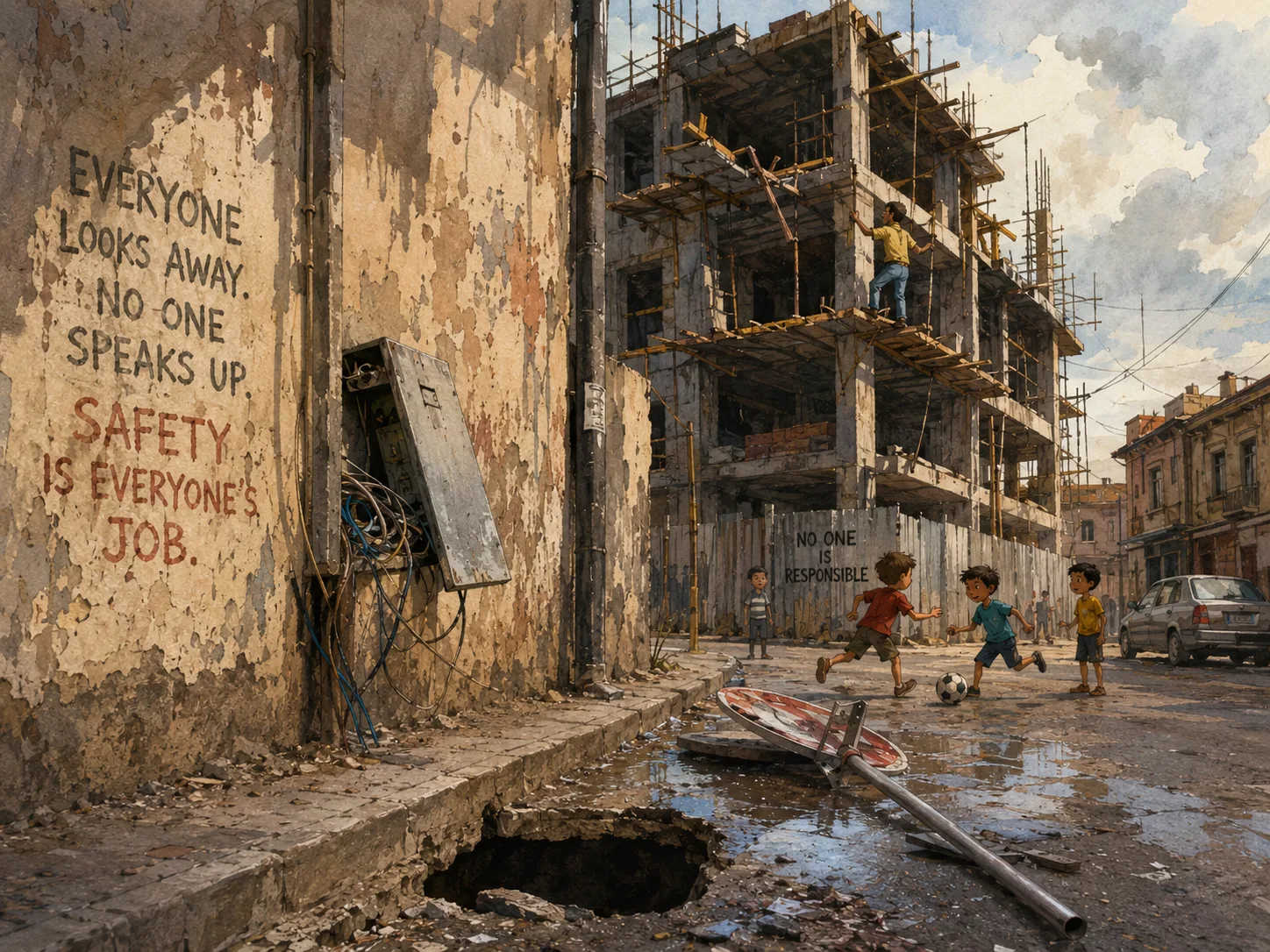
How can it be normal — when we are not at war — to wake on a single morning, in a single city, to six funerals on the pages of Facebook, with no kinship linking them, four of them painful accidents joined by one and the same recurring negligence: a child who fell into a sewer pit a contractor had left uncovered for long months; a construction worker who fell from the fifth floor because a safety harness had never entered his vocabulary; an entire family wiped out to the last soul in its sleep by a gas leak from a pipe never once inspected since the day it was installed; and a traffic accident caused by a speed bump (a "doudane") raised like a mountain across a highway… And we all know perfectly well that this truly happens in a single day — and that worse happens every day — in a single city; nor do we need a calculator to work out how many human beings die daily in a country of nearly fifty million. Yet we see no breaking news; the channels scarcely touch these stories, so numerous and so grievous have they become; rarely do we hear of an inquiry opened or an official questioned — let alone a director or a minister resigning and falling to his knees in tears, for that happens only in Japan, where negligence is counted a breach of honor.
Every day we see the many funerals and calamities on social media as though we were living through a war. They fill us with despondency and deep sorrow; we all write beneath them "May God have mercy," and then we pass graciously on — we do not ask, we do not hold to account, we do not even wonder. We pray for the dead but never ask after the real killer, though we all know who it is: negligence, which has no name and no face that can be brought to account. For it is everyone — ourselves included. Yes, us. Do not be too surprised at that.
The striking thing is that this does not happen in a society empty of institutions, nor in a city without schools, universities, and intellectuals. We have university professors who teach engineering, medicine, and law; we have brilliant minds, poets, writers, journalists, and influencers; we have ministries, municipalities, and inspectors; we have preachers and scholars who speak every Friday of mercy and the preservation of life. How can all these institutions and minds come together, and yet we remain utterly incapable of containing a problem of this magnitude — or even of closing a hole in a road, requiring a building to have an emergency exit, or inspecting a gas pipe before it kills an entire family? Why does it happen again and again without remorse devouring us all? And how do we pass by every one of these accidents with that loathsome coldness, as though they were the most ordinary thing? Where is the fault, ladies and gentlemen?!
I will volunteer here to open the wound and attempt to clean it. It may hurt a little — but not so much as the enormity of a death that reaps innocent lives every day through negligence. Before anything else, let us understand something about safety and security, and how a culture of safety is formed in the first place. As you know, ladies and gentlemen, it is not born whole in a single night, nor does it arise of its own accord; it grows and accumulates, passing along a course much like the maturing of a human being: embryo, then infant, then child, until its frame is complete.
In societies where the culture of safety stands before us as visibly as people themselves, it did not arrive one morning by a ruler's decree, nor through the effort of a single brave individual or one gifted writer working alone. It came from a great catastrophe that shook the public conscience: a factory fire, a collapsed building, a sunken ship, a house in flames. The people of that day did not content themselves with grief and condolence; they insisted on asking and on holding to account: Why did this happen? Who is responsible? How do we prevent it from happening again? That is the question that revives and rescues — when it is pressed insistently and never allowed to fall silent — because it is the cornerstone. Then that collective anger and media momentum turn into real pressure upon institutions, and governments respond by enacting laws that leave no room for personal discretion. Then comes the step with the deepest effect of all: the entry of the culture of safety into the school — not as a syllabus or a mere subject to be memorized and forgotten, but as conduct repeated daily and practiced until it becomes part of the child's formation through every stage of schooling. And when that child grows up, he carries the conviction with him into his workplace and his home; he becomes the one who refuses to work without a helmet, the one who reports danger, the one who raises his children by the very rule he was raised on — without feeling that he is making any exceptional effort, or overprotecting, or accustoming his children to a soft life, though many among us still believe that "manhood" is forged by falls, wounds, bullying, and violence, not by prevention. And so, in societies that chose safety generation after generation, law turned into habit, and habit settled into hearts and minds until it became culture. Look around you in those societies and you will find people cooperative, orderly, keeping the law with an instinctive care, as though it were second nature — out of the settled conviction that this serves their own interest as it serves everyone's.
As for the question that concerns us and matters to us as much as all this, it is: where did the path break off for us? Are we not supposed to be like that — and far better — since we hold all those rules and all that legislation? Why do all these painful accidents happen here and then repeat themselves with such shameful persistence? The momentary anger and boiling-over duly arrive — and then the thread snaps at the second stage, precisely where indignation is supposed to harden into binding law from which no one is exempt, not by influence, not by connections, not by family or friends. For when a law is written and enacted but not applied with rigor and an even hand upon all, it loses its credibility and its power ever to become habit or culture. Our Prophet, peace be upon him, laid down this principle in two immortal words that preceded every modern legislation: "There shall be no harm nor reciprocating of harm" (لا ضرر ولا ضرار), making the warding off of harm before it strikes a foundation of the Sharia, not a branch consulted only at need. So when we grow lax in enforcing the law, we do not merely break a man-made regulation; we suspend a firmly rooted rule of sacred law. And there lies the rupture — the irregularity, the disrespect, the indifference, indeed the many executions inflicted upon the law until it dies and is forgotten.
And when safety does reach the school, it usually remains a piece of information dictated in a disconnected lesson and never practiced as conduct. The child leaves having memorized every rule — examined on them and passing with success — and they bear no relation whatever to his life. This recurring rupture, dragging its disappointment along generation after generation, is what leaves us holding the seeds of a safety culture that has never borne fruit — far indeed from becoming that great tree of abundant, sheltering, safe shade.
And why should we wonder at this, when as a Muslim nation we have never lacked religious foundations to anchor safety in us and plant this awareness in us daily across the centuries — when we hold the oldest system for the protection of soul and body, preceding every modern human legislation by hundreds of years? God Almighty commands us not to cast ourselves into destruction with our own hands, and the meaning does not stop at the cliff's edge or before the fire; it embraces every avoidable fall, and every danger left in people's way by intent or by neglect. The rendering of trusts is, for us, not an optional virtue but an explicit divine command: "Indeed, God commands you to render trusts to whom they are due" (إِنَّ اللَّهَ يَأْمُرُكُمْ أَنْ تُؤَدُّوا الْأَمَانَاتِ إِلَى أَهْلِهَا). The engineer who cuts corners in his calculations, the contractor who seals a pit only halfway, the technician who signs off on an inspection he never performed — all of them betrayed the trust before they ever broke a law.
In the Quran there are decisive verses on the preservation of human life, deeper and more far-reaching than anything humanity has known: "Whoever gives life to a soul, it is as if he had given life to all of mankind" (فمن أحيا نفسًا فكأنما أحيا الناس جميعًا). The preservation of life is among the greatest purposes of the Sharia — its very core, the axis on which legislation and law turn. It is therefore only natural, as we practice this religion and hear these verses, that we should hasten in full awareness to repair a broken stair, to close a neglected pit, to refrain from parking before an emergency exit, to respect the rules of the road, and to keep far from harm both open and hidden — for in neglecting all of this, souls are extinguished. Indeed it is to be expected, and natural, that we should hasten toward whatever may be a direct cause of keeping one soul alive, for in God's scales it weighs as the giving of life to all mankind; and conversely, to neglect a life — let alone to take it — is a great corruption and a great crime.
Thus was this nation commanded not to spread corruption in the earth after it had been set right. And corruption here is not destruction alone — abundant though that is in our cities and neighborhoods — but every negligence that turns a safe building into a graveyard, a pit into a child's grave, a neglected wire into a human being's death by electrocution, and a hospital ward into a din of people like a marketplace. I am certain that some patients die suffocated by the noise, the chaos, and the shouting while they lie in the weakest and most precarious moments of their lives, between life and death. I saw all of this with my own eyes, and I could not pass from that place in peace.
And this, most regrettably, sets before us a question we do not like to face, and one that is hard to deal with: who said we are innocent?
Where do we come by a conscience that rests in all this comfort — or, as the English say, cool as a cucumber — while people die of negligence and dereliction before the eyes and ears of every one of us: the hospital director, the doctor in the clinic, the teacher in the school, the highest official, the father in his home, the mother with her children? I mean everyone, without exception. Let me, then, accuse us all: who said God will forgive us if we had a hand, from near or from far, in a human being's death or injury?
And if you find that question hard, know that harder still, and more painful, is that we truly are an inseparable part of these societies dying of neglect. We are a nation taught that the lowest branch of faith is to remove what is harmful from the road, and that doing so is charity; indeed it is related in our tradition that God forgave a man because he moved aside a thorny branch that was hurting passersby, and that another entered Paradise because he removed a harmful bough from the Muslims' path. A deed of that size became cause for forgiveness and for entry into Paradise. What then shall we say — we who pass the exposed wire and do not report it, who see the pit and simply step around it? Who watch heaps of refuse climbing the walls and the green spaces around us and do not lift a finger? Is there not in this silence of ours a share of the very harm we were warned against? Our Prophet taught us that the road has its rights, that among its rights is the keeping of harm from it, and that the true Muslim is he from whose tongue and hand people are safe — not he who is safe from questioning and slips clear of punishment. Indeed, we may be committing something worse still, when we wound one another with cold hearts, giving no weight to the sick, the old, the weak, the child, the blind, or the disabled; when we live in neighborhoods teeming with hazards and all of us watch people's suffering, passing by as spectators, perfectly at ease, because we imagine it all to be very far from us — when, by God, it is near. So are we truly innocent?
Removing harm from the road, however great its reward, remains an individual act so long as it does not ripen into a collective consciousness absorbed by society as a whole. Here we reach a stage of maturity called collective responsibility, which was never a footnote in our Islamic conception, for it is the essence of civilization and of stewardship, the spirit of progress and ascent; no nation without its share of it will prosper — it is like the gold reserves held in banks, international and local. For the Muslim does not live for himself; he is entrusted with everything around him, and as God entrusted him with his prayer and his fasting, He charged him also to discharge all his responsibilities with the same seriousness and the same weight. So when our Prophet, peace be upon him, said that every one of you is a shepherd and answerable for his flock, he did not mean the ruler alone; he drew a circle of responsibility that begins with the individual and widens to take in his neighbor, and even the wayfarer crossing his road. That is why Umar ibn al-Khattab, may God be pleased with him, said in his immortal words: "If a mule stumbled in Iraq, I would fear that God might ask me about it: why did you not level the road for her, Umar?" See how the Caliph's responsibility extended, in his own conscience, to a stone in a road, a hole in the ground, a beast that cannot speak. What then of us today — we who have more claim than anyone to that conscience — when it is human souls, not beasts, that fall into our pit?
This responsibility grows by degrees. It begins in an individual conscience that senses God watching even in the smallest details, then widens to bind a person to those around him with a bond deeper than passing neighborliness. That is why our Prophet likened the believers to a building whose parts hold one another up, and to a single body: when one limb aches, the whole body answers with sleeplessness and fever, in a harmony and concord that reflect the very spirit of mutual aid. So when a child falls into a pit — in our neighborhood, or far away, or in the district next door — we have no right to feel that it does not concern us; for the body is one, the sorrow is one, and we are all answerable before God, civilly and religiously.
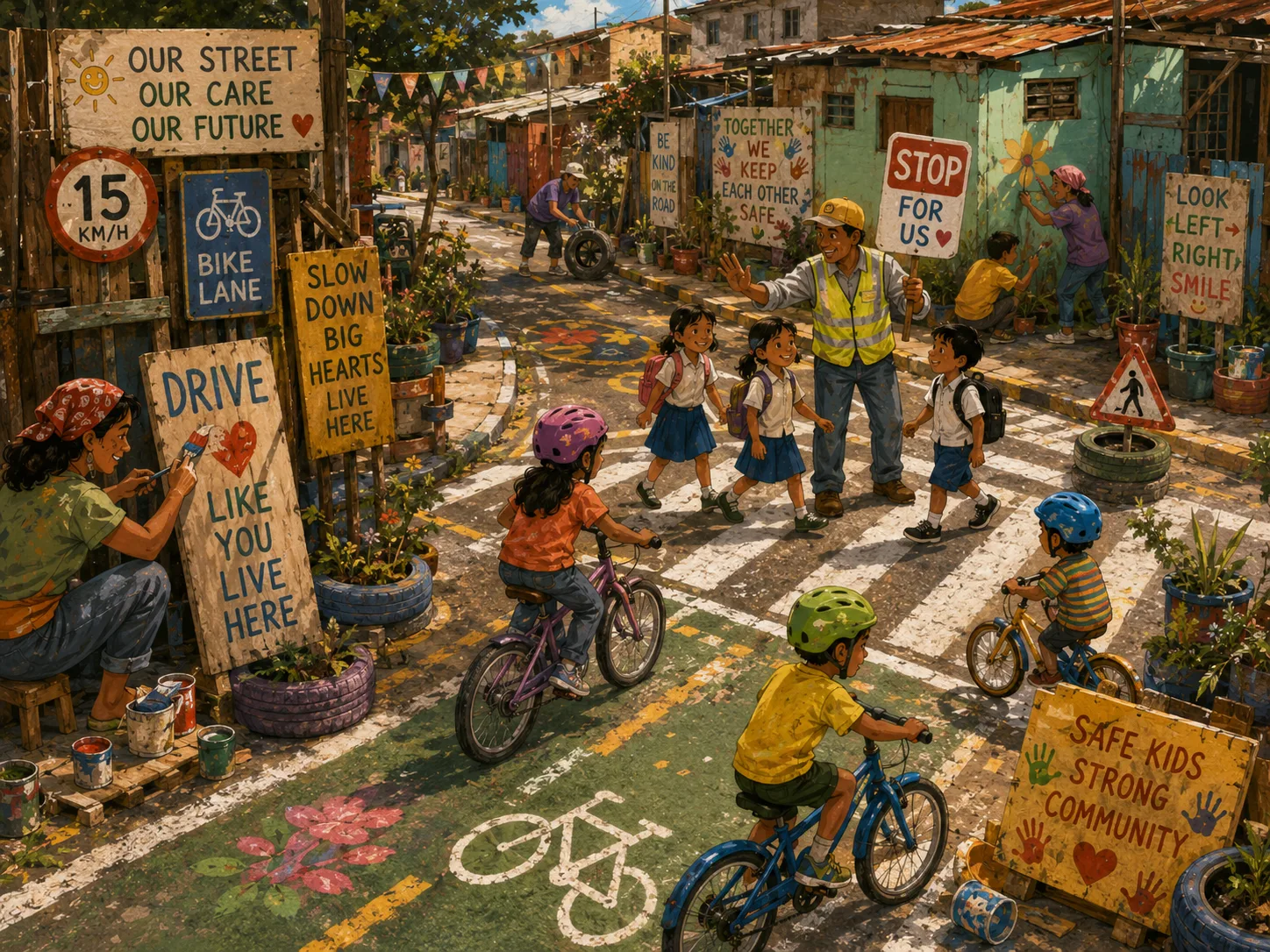
And this responsibility will not become settled conduct, nor be brought to life by merely hearing a few sermons or reading a few books. It is the harvest of an unbroken upbringing: it begins at home, when the child sees his father repair a hole in the road without being asked, volunteering to mend whatever has broken around him; it extends to the school, when the child is himself kept safe and made a participant in everything that makes for safety; and it is completed when he grows up to find himself, quite naturally, the one who reports danger and refuses to work in an unsafe environment. Here religiosity becomes a constructive religiosity — contributing, useful to people — made visible in the guarding of the road even by the simplest of means: a plain wooden sign, an artful paper notice that costs not a single dinar, or an intensive awareness campaign aimed at the young so that it takes root and endures.
I do not want to smear honey over a festering wound. And then I asked myself: is it not a matter of honesty, and of good taste, that a subject of this gravity not be presented in a style that drains it of its meaning? For it is not enough to know, and to expound it as one more lesson and one more sermon — so I beg your fullest attention. The teacher must bestir himself and set aside minutes of every class to speak of one small danger and how to guard against it; the imam must make the Friday sermon, once a month, an occasion to speak of removing harm in its many branching senses — from repairing a pit to reporting corruption or a proven danger; and there must be civic associations of every kind, as youth groups have already done in more than one city. Volunteer medical students resolved to walk the neighborhoods teaching people cardiopulmonary resuscitation, after a child choked to death before the eyes of his helpless family. Other youth associations transformed the face of their city with artful wooden signs for traffic, environment, and safety in the city center; other initiatives began with young people who spent an evening planning how to eliminate a problem in their neighborhood, or painting a wall and inscribing it with encouraging, wholesome sayings, as happened in the city of El Eulma, in Setif; or a group of merchants distributing first-aid kits and building and repairing public parks for children's safety.
Small initiatives like these went on to save lives that might otherwise have been counted among the victims of negligence — the ones we pass over with the words "God's decree," when in truth they are a suffocation or a hemorrhage that could have been prevented. And God does not love corruption.
No one has the power to bring back those we lost to negligence and the absence of safety, and we are not here to grieve or mourn or trade blame. But if you have passed this way and read this essay, know that you are responsible; wherever you go, wherever you flee, you are responsible — and you will not be innocent each time someone dies of negligence when you could have had a part in giving people life.
This means it is not enough to offer the beautiful, prescribed prayer for mercy alone — that is the least of the duty, and the last of it — nor does contentment with fate and the divine decree, its good and its ill, suffice; that alone is not the fullness of faith. Our Prophet, peace be upon him, taught us that whoever among you sees a wrong should change it with his hand; if he cannot, then with his tongue; if he cannot, then with his heart — and that is the weakest of faith. What, then, when there are among us those able to prevent an evil who did nothing? Each one of us carries a portion of a trust he may not leave to another; for we are one nation and one body, and the road from which we do not remove the harm remains a harm — until someone comes to lift it away, or someone with no strength and no power falls into it. And I, and you, and all of us will one day be asked: what did we do when we saw the pit?
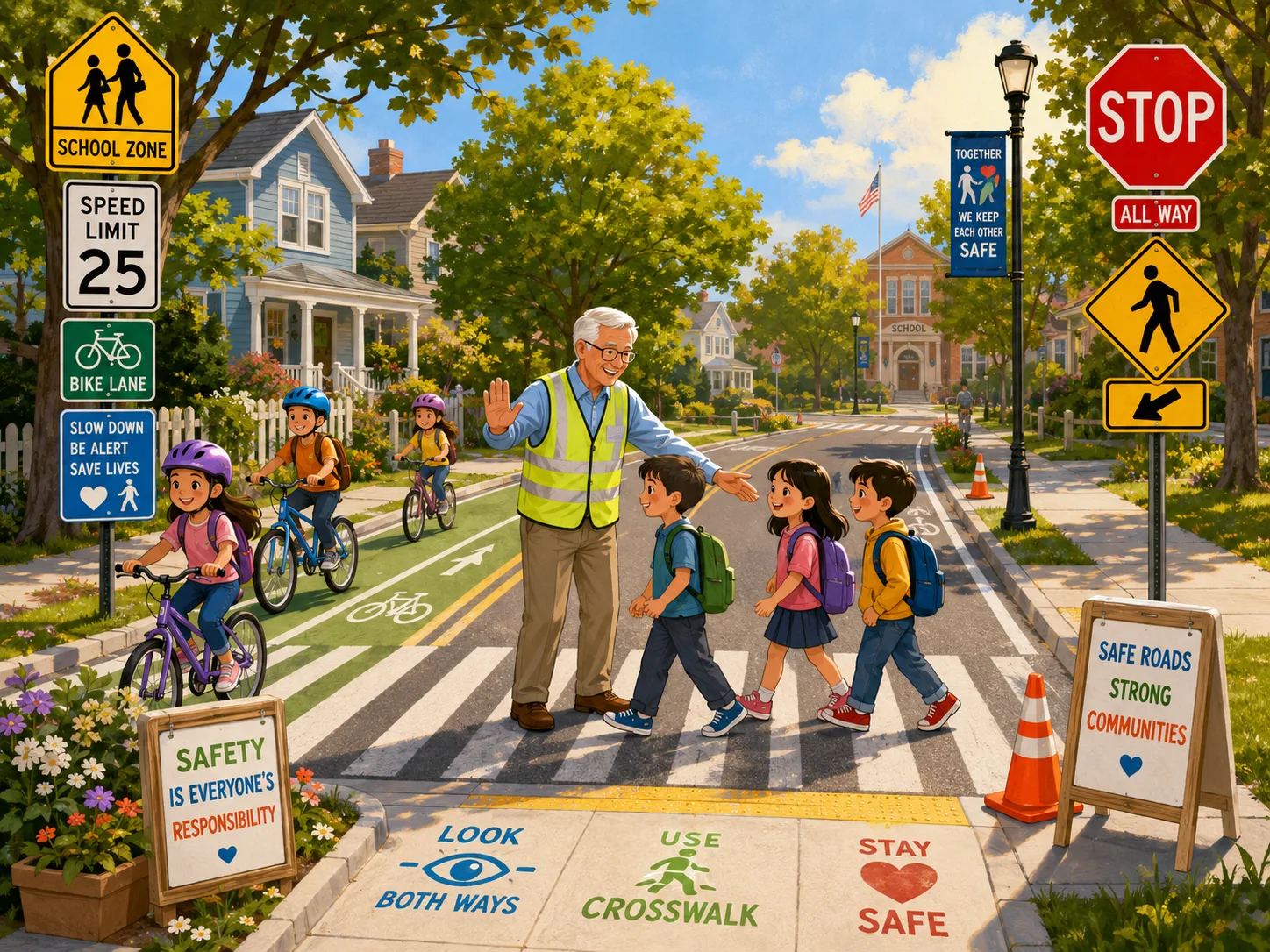
With this essay I will share three telling pictures of three societies: a society in which safety has become a culture, entrenched and standing in plain sight; a society grown used to pits and peril, waiting in vain for someone to come fill the hole and mend the fault — and until that day children will die, workers will fall, and disasters will strike; and a third society, poor in resources but high in safety awareness and culture, which used its modest means — wood, paper, artful drawings on the ground and on the walls — to spread the consciousness of safety. This is what is asked of us, and the proof that a culture of safety does not necessarily require a budget of millions; it requires, first, awareness and a living conscience. The rest I leave to you, and to your good understanding and judgment.
Dr. Fadila Grine
Montreal, July 2026